


BRZ FOOD · CHIMICHURRI
Gringo
Chimichurri herbs. Before and after the fire.
A blend of dehydrated vegetables and herbs with no added salt. Use it dry, mix a chimichurri sauce, or follow Adriano as he prepares porchetta with Gringo.
- Gluten free
- No added sugar
- No added MSG
- No added salt
Watch Adriano season and roll pork belly with Gringo. Or start with a simple chimichurri sauce for your next barbecue.
See how to use it
HERBS THAT GO BEYOND THE GRILL
Rub it in.
Spoon it over.
Gringo brings a herb-and-garlic profile to meat, seafood and vegetables. In this Foodland SA recipe, Adriano sprinkles it inside pork belly before rolling his porchetta.
PORCHETTA WITH ADRIANO
The cut. The rub.
The cook.
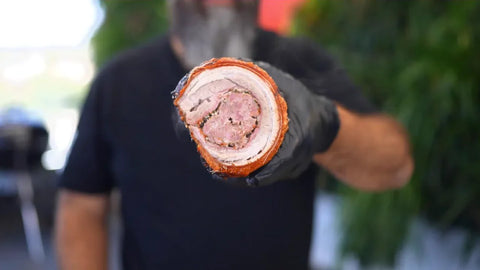
See Gringo in Adriano's rolled pork belly recipe. These highlights introduce the preparation shown in the video.
More about the grind, timing and cooking methods
Why it works
Gringo is a blend of dehydrated vegetables and herbs, with no added salt in the ingredient list. Its herb-and-garlic profile complements meat, seafood and vegetables.
How to use it
For chimichurri sauce, mix with olive oil and red wine vinegar. For a marinade, combine with olive oil. It can also be applied as a dry rub or sprinkled over cooked food.
More ways to use it
Try it with steak, chicken, lamb, seafood, roast vegetables, potatoes and salads. Adjust salt separately to suit your dish.
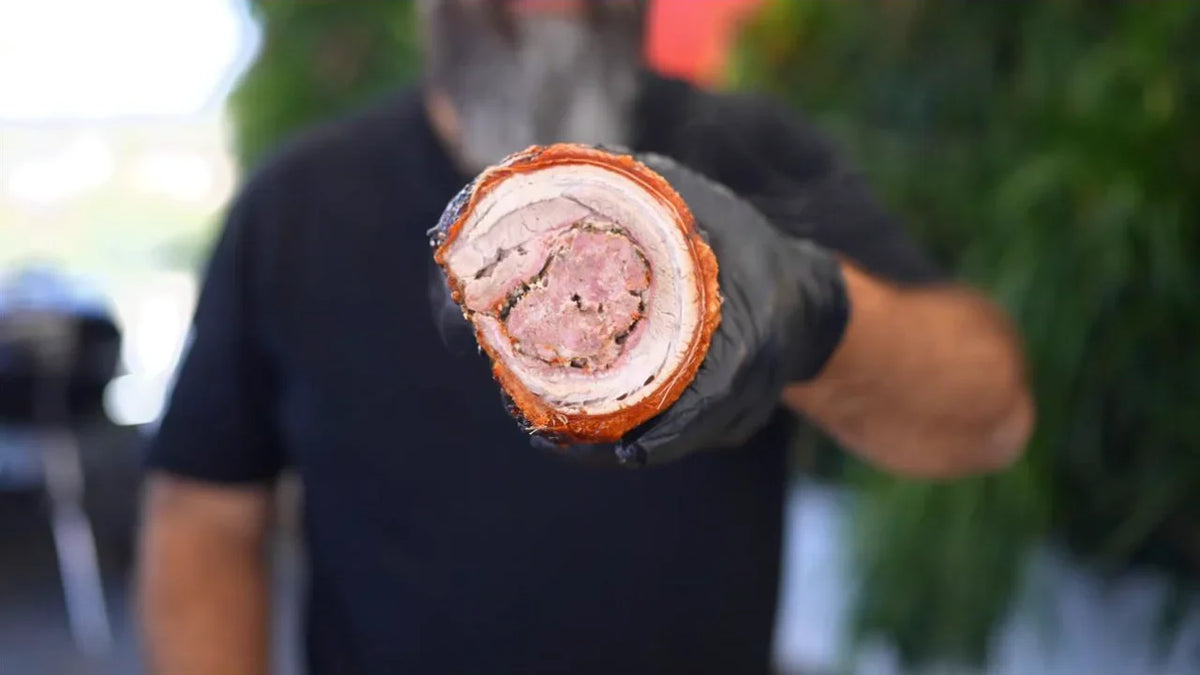
Porchetta with Gringo
Adriano and Foodland SA, from seasoning the pork belly to the finished porchetta.
Watch the recipe · 1:32ANOTHER WAY TO USE YOUR JAR
Make it chimichurri.
Spoon it over grilled meat, vegetables or potatoes. The same herbs become a sauce with a few pantry ingredients.
Know your seasoning.
Dehydrated Vegetables and Herbs.
About the ingredient label
Australian labelling lets herbs and spices be declared as a group when each is under 5% of the product, so a named spice can be in the jar without being listed on its own.
May contain traces of nuts. No added colours, flavours or preservatives. No genetically modified ingredients.
| Per | 100 g | 10 g serve |
|---|---|---|
| Energy | 1,350 kJ | 135 kJ |
| Carbohydrate, total | 56.0 g | 5.6 g |
| Sugars | 6.3 g | 0.6 g |
| Protein | 14.9 g | 1.5 g |
| Fat, total | 2.2 g | 0.2 g |
| Saturated | 0.8 g | 0.1 g |
| Sodium | 60 mg | 6 mg |
The nutrition panel uses a 10 g serve of seasoning. This is a label reference, not a measured dose from the porchetta video.
Read the front label
BRZ FOOD
GRINGO
CHIMICHURRI
SIGNATURE RUB
120G
A little more before you cook
Good questions. Straight answers.
What makes Gringo different?
Gringo is a blend of dehydrated vegetables and herbs, with no added salt in the ingredient list. Its herb-and-garlic profile complements meat, seafood and vegetables.
How do I use Gringo?
For chimichurri sauce, mix with olive oil and red wine vinegar. For a marinade, combine with olive oil. It can also be applied as a dry rub or sprinkled over cooked food.
What can I cook with Gringo?
Try it with steak, chicken, lamb, seafood, roast vegetables, potatoes and salads. Adjust salt separately to suit your dish.
How much do I use?
About 15 g per 500 g of meat, as a starting point to adjust to your own taste.
How far does one jar go?
Use about 15 g per 500 g of protein. At that rate a 120 g jar seasons around 8 serves.
This is a starting point, not a rule: adjust to taste, and to the cut and the cook.
What does it cost per 100 g?
The jar is 120 g at $18.95, which is $15.79 per 100 g.
Make it your kind of barbecue.
Season with Picanha, explore Mexicana for another cook, or get Gringo in a set.
